
Introduction: Why Energy Independence Matters Today
Energy has become one of the biggest challenges for businesses worldwide.
Industrial facilities, commercial buildings, telecom operators, hospitals, and remote sites are facing increasing pressure from:
- Rising electricity costs
- Unstable grid supply
- Frequent power interruptions
- Growing sustainability requirements
For many organizations, the challenge is no longer simply generating electricity.
The bigger question is:
How can businesses ensure reliable, affordable, and sustainable power whenever they need it?
This is why more companies are turning to microgrid systems.
A microgrid combines renewable energy generation, battery storage, intelligent energy management, and optional backup power sources to create a more flexible and resilient energy system.
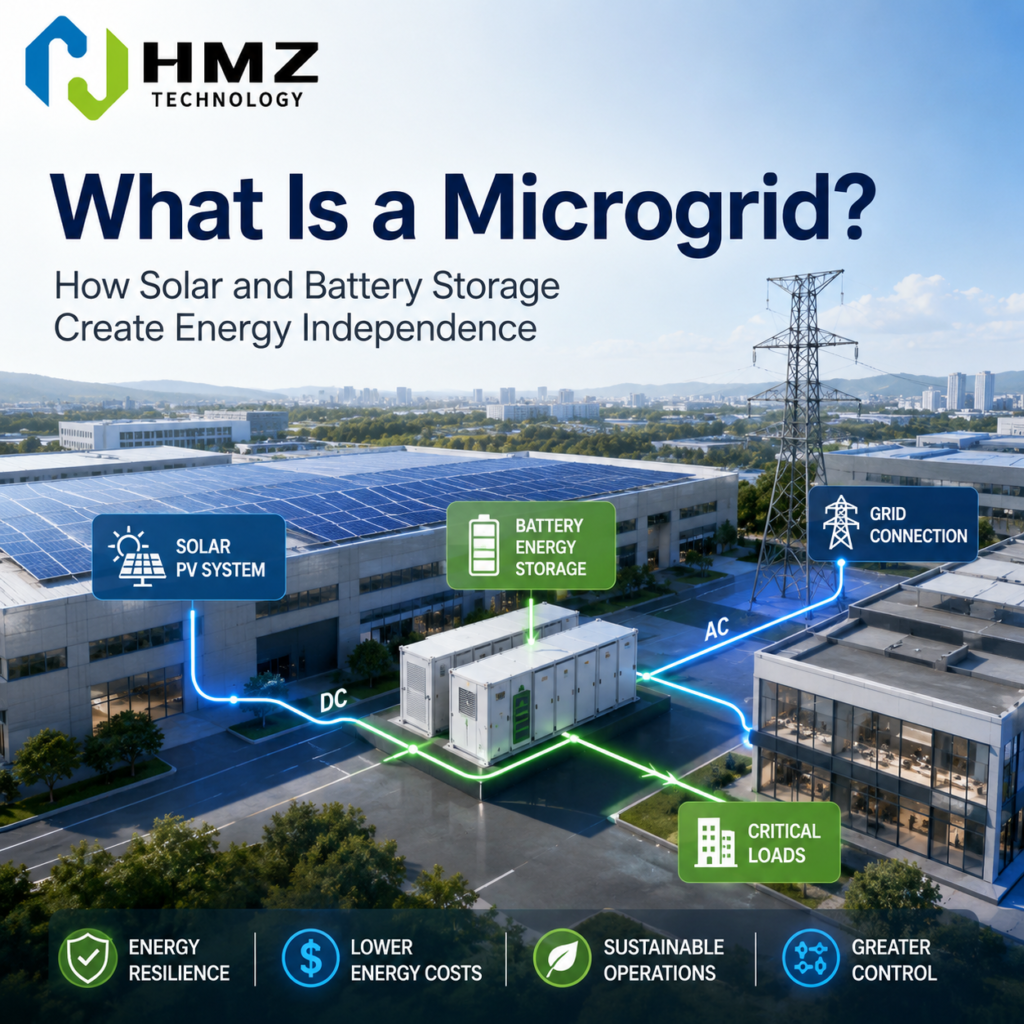
What Is a Microgrid?
A microgrid is a localized energy system that integrates electricity generation, energy storage, and intelligent control technologies to supply power to a specific facility or group of facilities.
Unlike traditional electricity systems that mainly depend on centralized utility grids, a microgrid allows users to:
- Generate electricity locally
- Store excess energy
- Manage energy consumption intelligently
- Continue operation during grid interruptions
A typical microgrid includes four key components:
1. Solar PV System
Solar panels generate clean electricity during daylight hours.
The generated energy can be:
- Used directly by local loads
- Stored in batteries
- Exported to the utility grid
Solar PV provides the renewable energy foundation of the microgrid.
2. Battery Energy Storage System (BESS)
Battery storage improves energy flexibility.
It allows businesses to:
- Store excess solar energy
- Provide backup power
- Reduce peak electricity costs
- Increase renewable energy utilization
3. Energy Management System (EMS)
The EMS acts as the intelligent brain of the microgrid.
It monitors:
- Solar generation
- Battery status
- Electricity demand
- Grid conditions
The system automatically optimizes energy flow to improve efficiency.
4. Grid Connection and Backup Sources
Depending on project requirements, microgrids can integrate:
- Utility grid
- Diesel generators
- Other renewable sources
This creates a flexible energy ecosystem.
How Does a Solar + Battery Microgrid Work?
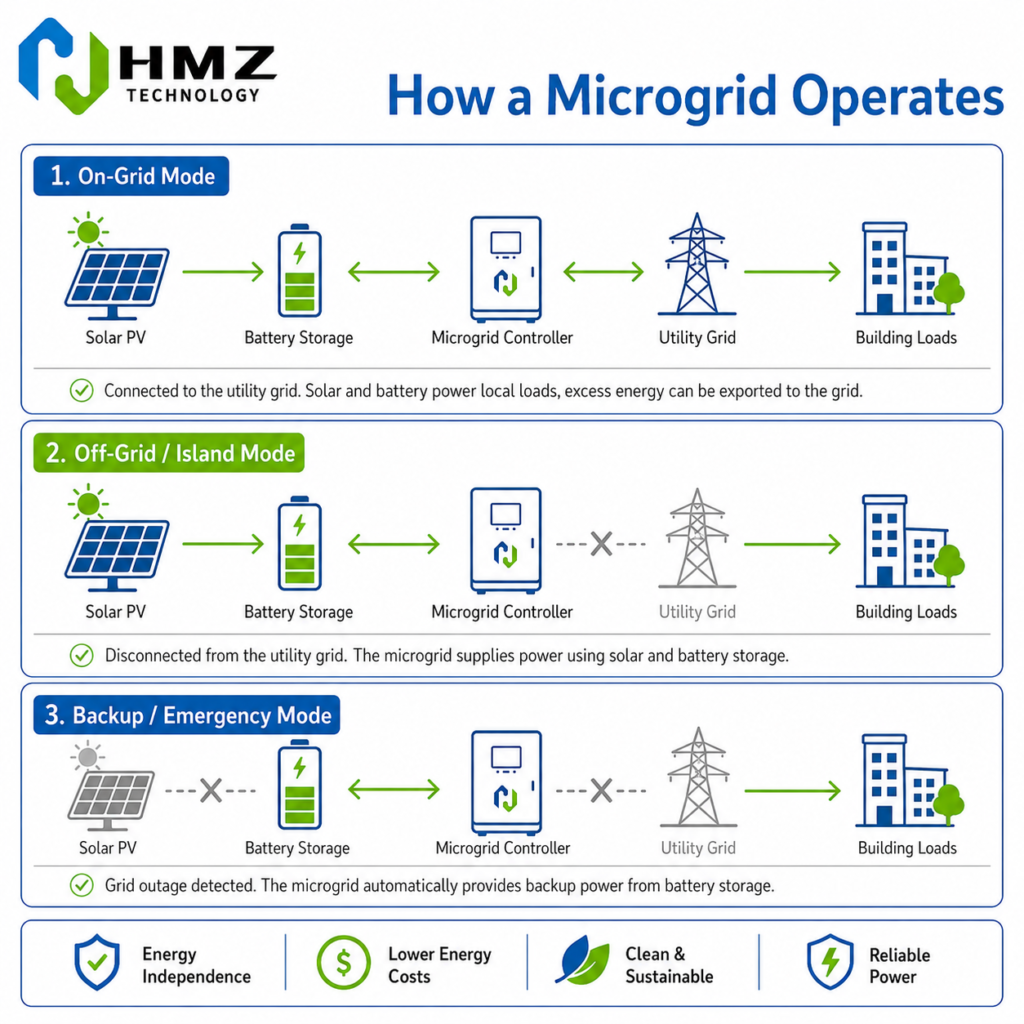
A microgrid can operate in different modes depending on energy conditions.
1. On-Grid Mode
When the utility grid is available:
Solar PV supplies electricity to local loads.
Excess energy can:
- Charge battery storage
- Be exported to the grid
The system continuously optimizes energy usage.
Energy flow:
Solar PV → Battery Storage → Microgrid Controller → Grid → Building Loads
2. Off-Grid / Island Mode
When the utility grid becomes unavailable:
The microgrid disconnects from the grid and operates independently.
Solar and battery storage continue supplying electricity to connected loads.
This mode is especially important for:
- Remote areas
- Weak-grid regions
- Critical facilities
3. Backup / Emergency Mode
During unexpected grid failures:
The microgrid automatically provides backup power from battery storage.
Critical equipment can continue operating without interruption.
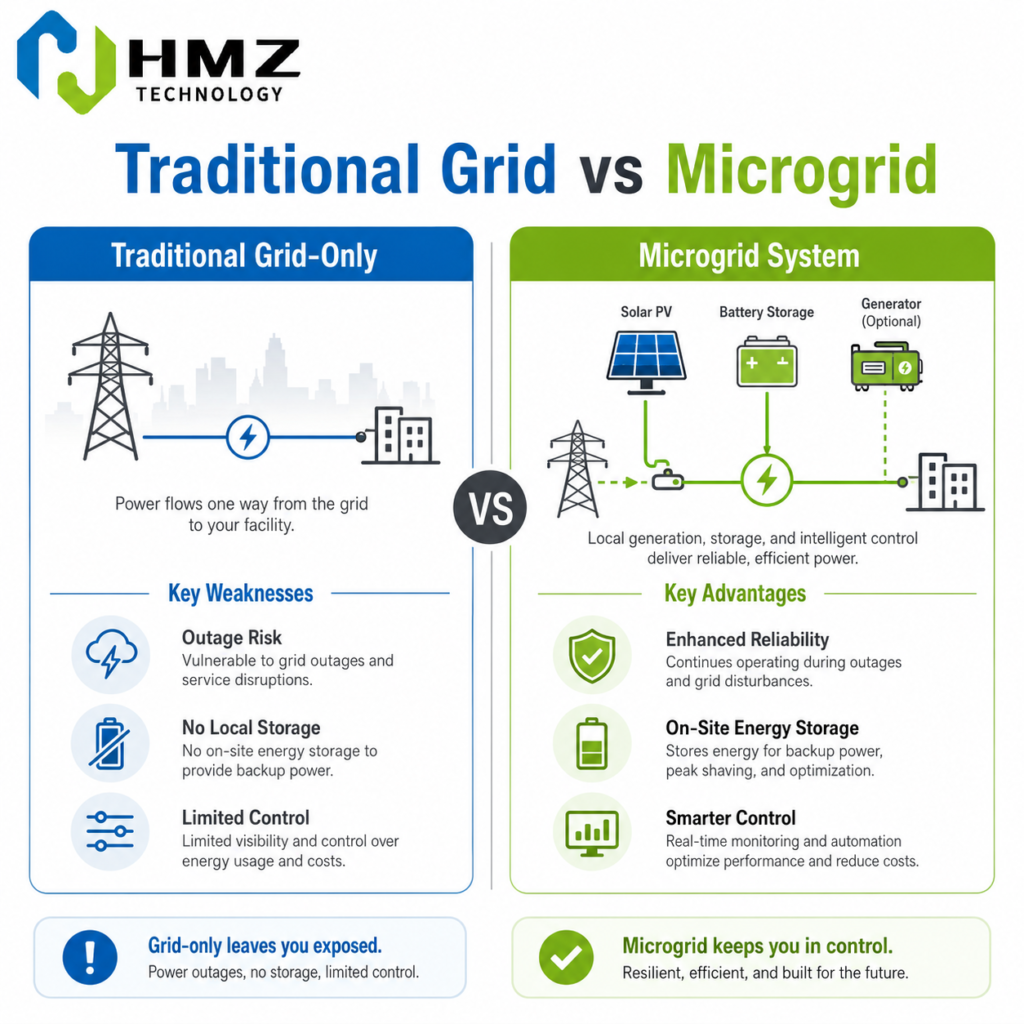
Traditional Grid vs Microgrid: What Is the Difference?
Traditional electricity systems mainly depend on centralized power generation.
Electricity usually flows:
Utility Grid → Facility
Although reliable in many areas, traditional grids have limitations.
Limitations of Traditional Grid-Only Systems
1. Outage Risk
Businesses may experience:
- Production interruption
- Equipment downtime
- Revenue loss
2. No Local Energy Storage
Without battery storage, excess renewable energy cannot be saved for later use.
3. Limited Energy Control
Users have limited control over:
- Energy generation
- Energy consumption
- Energy cost optimization
Advantages of Microgrid Systems
A microgrid changes the traditional energy model.
It enables:
- Local energy generation
- Battery storage
- Intelligent energy control
- Flexible operation modes
Enhanced Energy Resilience
Microgrids can continue operation during:
- Grid outages
- Power shortages
- Network instability
Lower Energy Costs
Solar and battery storage help businesses:
- Reduce electricity purchases
- Avoid high peak demand charges
- Optimize energy usage
Smarter Energy Management
Real-time monitoring allows businesses to understand and control their energy performance.
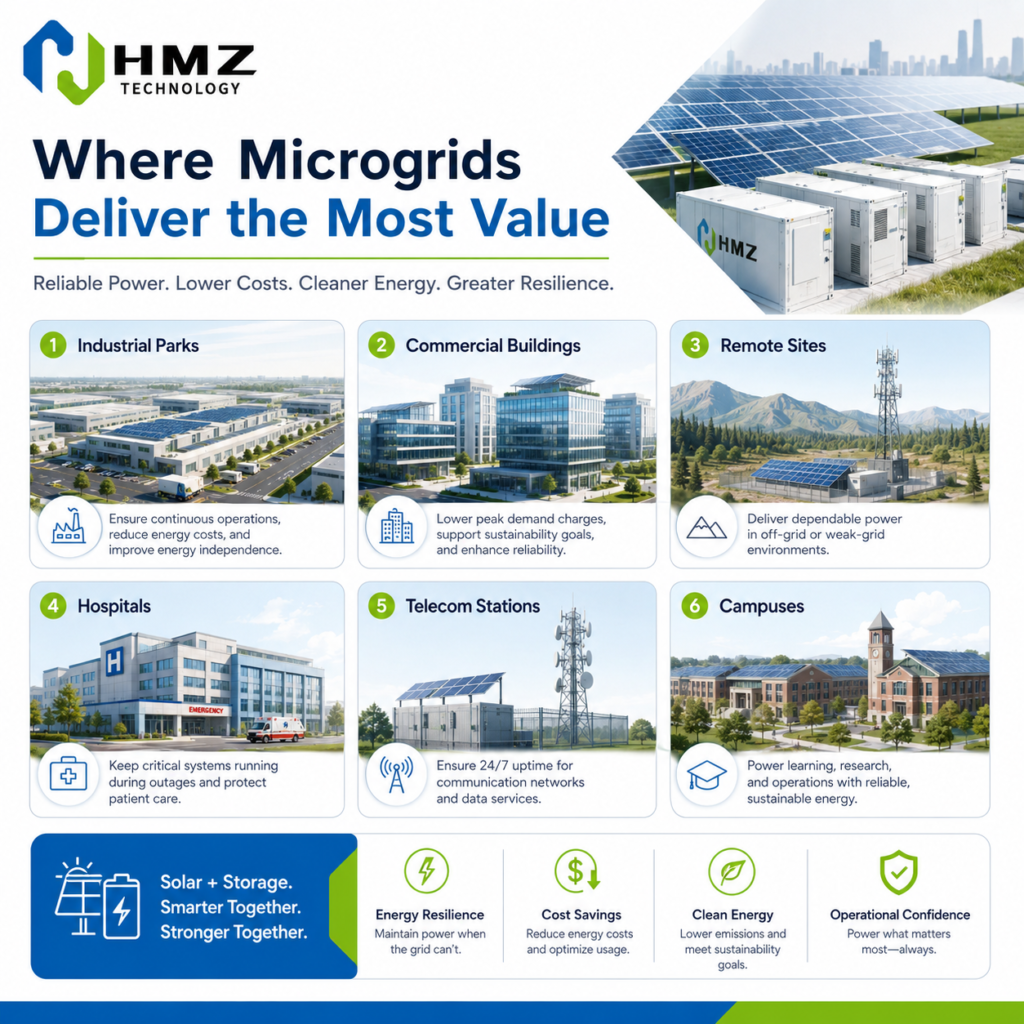
Where Do Microgrids Deliver the Most Value?
Microgrid systems are suitable for locations where reliable electricity is essential.
Industrial Parks
Manufacturing facilities require continuous electricity.
Microgrids help:
- Maintain production continuity
- Reduce energy costs
- Improve energy independence
Commercial Buildings
Office buildings and commercial facilities can achieve:
- Lower electricity expenses
- Better sustainability performance
- Improved backup capability
Remote Sites
Remote locations often experience unreliable grid infrastructure.
Solar + battery microgrids provide dependable electricity without full dependence on traditional networks.
Hospitals
Healthcare facilities require uninterrupted power for:
- Medical equipment
- Emergency systems
- Patient care
Telecom Stations
Communication infrastructure requires 24/7 reliability.
Microgrids help reduce:
- Diesel consumption
- Maintenance requirements
Campuses
Universities and research facilities can improve:
- Renewable energy utilization
- Energy efficiency
- Operational reliability
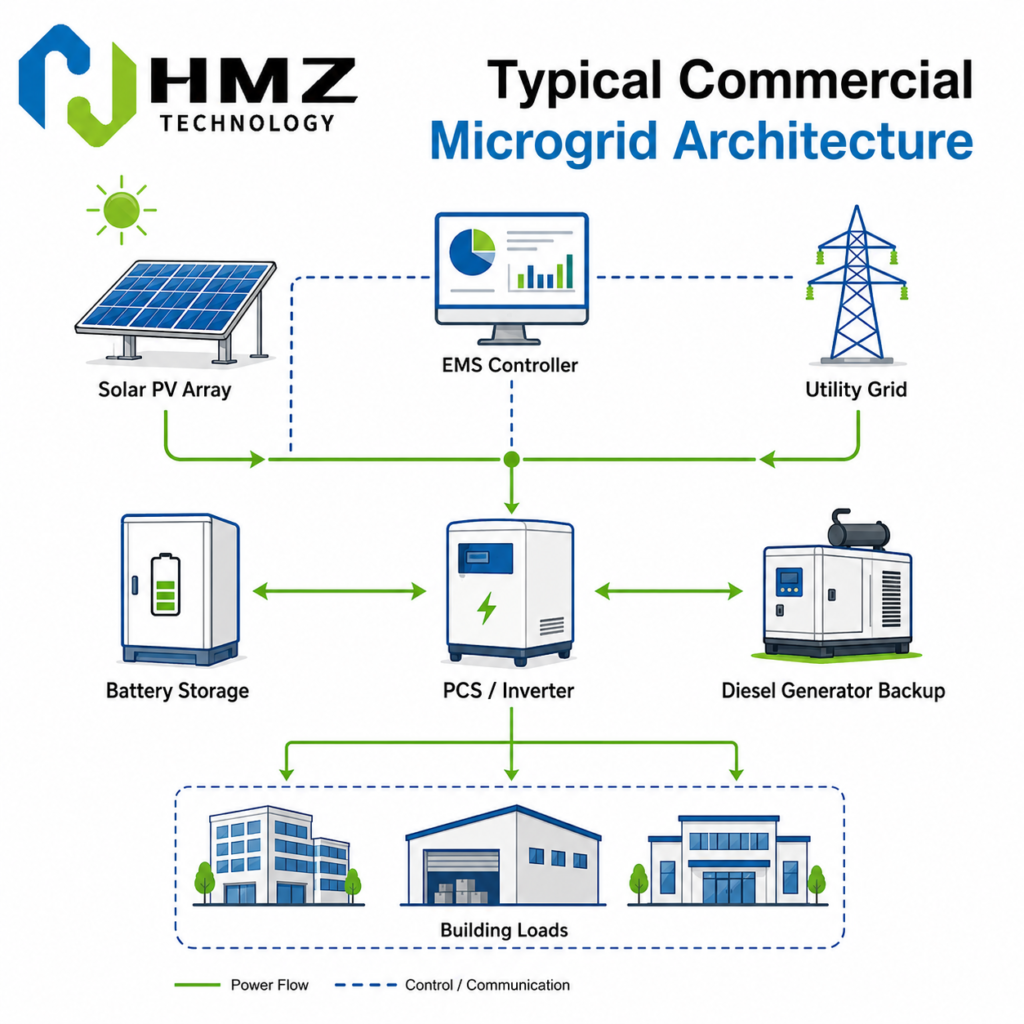
Typical Commercial Microgrid Architecture
A commercial microgrid usually consists of:
Solar PV Array
Generates renewable electricity.
↓
EMS Controller
Controls energy operation.
↓
Battery Energy Storage System
Stores electricity and provides backup.
↓
PCS / Inverter
Manages power conversion.
↓
Diesel Generator (Optional)
Provides additional backup.
↓
Building Loads
Supplies energy to facilities.
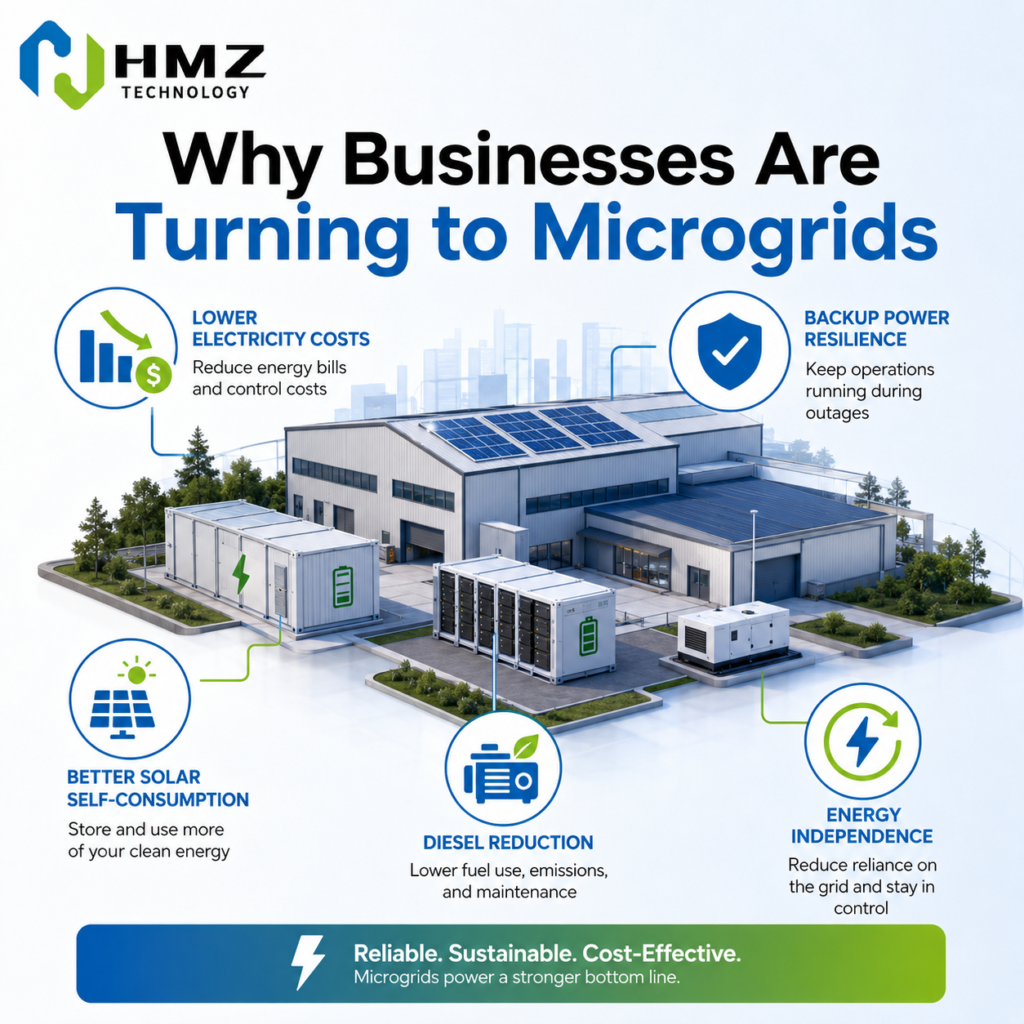
Why Businesses Are Turning to Microgrids
Businesses are adopting microgrids because they need more control over energy.
Main benefits include:
Lower Electricity Costs
Solar generation and battery storage help optimize electricity consumption.
Backup Power Resilience
Critical operations can continue during grid interruptions.
Better Solar Self-Consumption
Battery storage allows businesses to use more renewable energy.
Reduced Diesel Dependence
Hybrid energy systems reduce fuel consumption and maintenance costs.
Greater Energy Independence
Businesses gain more control over their energy future.
HMZ Microgrid Solutions
HMZ Technology provides integrated energy solutions combining:
- Solar PV systems
- Battery Energy Storage Systems
- Hybrid inverters
- EMS solutions
- Commercial and industrial energy storage systems
Our solutions support:
- Industrial parks
- Commercial buildings
- Remote power systems
- Telecom applications
- Critical infrastructure
By integrating renewable generation, intelligent control, and reliable storage technology, HMZ helps businesses build energy systems that are:
Reliable. Sustainable. Cost-effective.
Conclusion
A microgrid is not only a backup power system.
It is an intelligent energy ecosystem that allows businesses to generate, store, and manage electricity more effectively.
With the combination of:
✔ Solar PV
✔ Battery Energy Storage
✔ Intelligent Energy Management
organizations can achieve:
✔ Greater energy resilience
✔ Lower operating costs
✔ Better renewable energy utilization
✔ Reduced dependence on traditional power sources
As global energy challenges continue to increase, microgrids will become a key solution for building a more reliable and sustainable energy future.
FAQ
What is a microgrid?
A microgrid is a local energy system that integrates generation, storage, and intelligent control to provide reliable electricity.
How does battery storage improve a microgrid?
Battery storage saves excess solar energy and provides backup power when solar generation or grid supply is unavailable.
Can a microgrid operate without the grid?
Yes. A microgrid can operate in island mode using solar generation and battery storage.
What industries need microgrid systems?
Industrial parks, hospitals, telecom stations, commercial buildings, campuses, and remote sites can benefit from microgrids.
What is the difference between a microgrid and traditional power supply?
Traditional grids only deliver electricity, while microgrids generate, store, and intelligently manage energy locally.
Related Insights from HMZ Technology
Industrial energy management is rapidly evolving. While rooftop solar PV provides an effective way for factories to generate clean electricity, many businesses are now looking beyond solar generation and exploring integrated solutions such as energy storage, intelligent energy management, and microgrid systems.
To better understand how commercial and industrial users can optimize their energy strategy, explore more insights from HMZ Technology’s renewable energy knowledge center, including solar PV solutions, C&I energy storage systems, and practical applications for industrial energy management.