
When businesses talk about energy independence, many people immediately think about solar panels or battery storage.
However, a complete microgrid is much more than a solar system or an energy storage device.
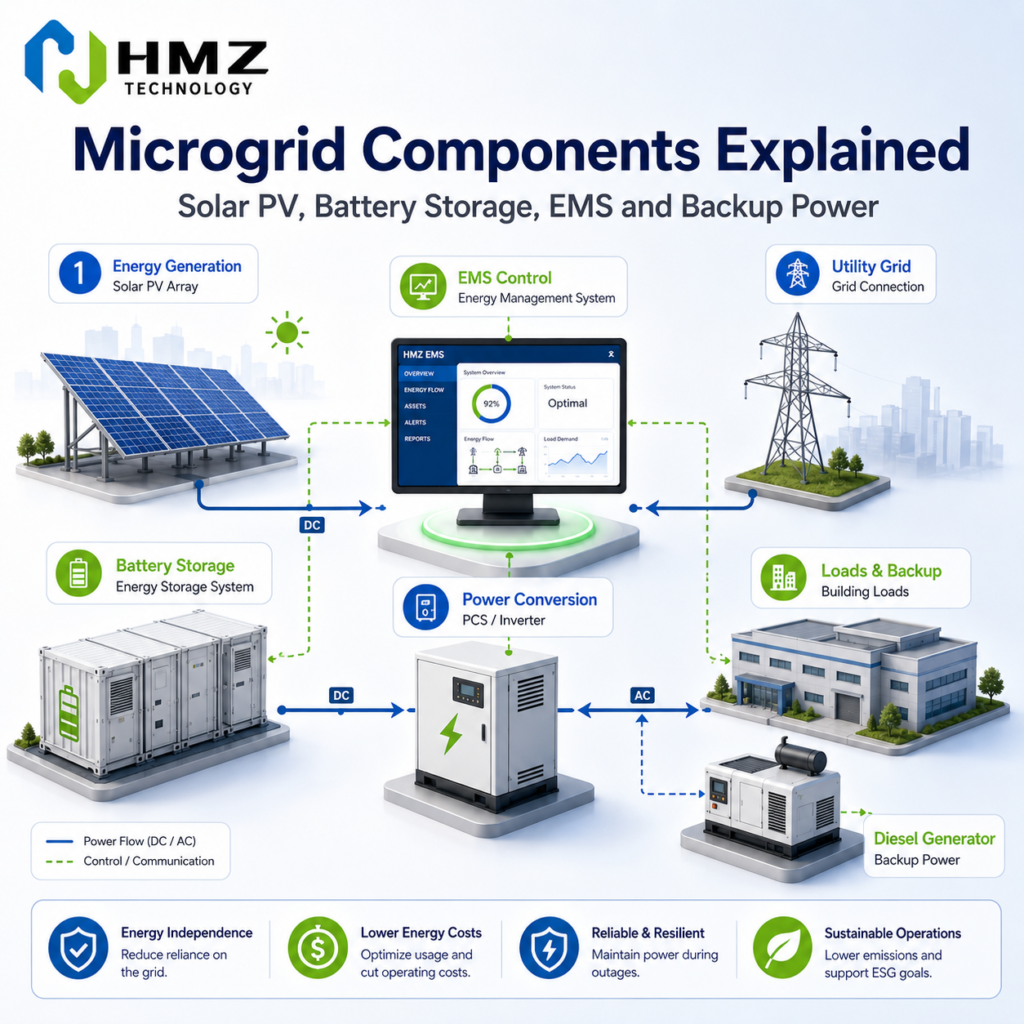
A microgrid is an integrated energy system that combines:
- Energy generation
- Energy storage
- Power conversion
- Intelligent energy management
- Energy loads
- Backup power sources
Together, these components work as a coordinated system to provide reliable, efficient, and flexible electricity for commercial and industrial applications.
What Are the Main Components of a Microgrid?
A complete microgrid system typically includes five key components:
- Energy Generation
- Battery Energy Storage System (BESS)
- Power Conversion System (PCS)
- Energy Management System (EMS)
- Energy Loads
1. Energy Generation: Where Does Microgrid Power Come From?
Energy generation is the starting point of every microgrid system.
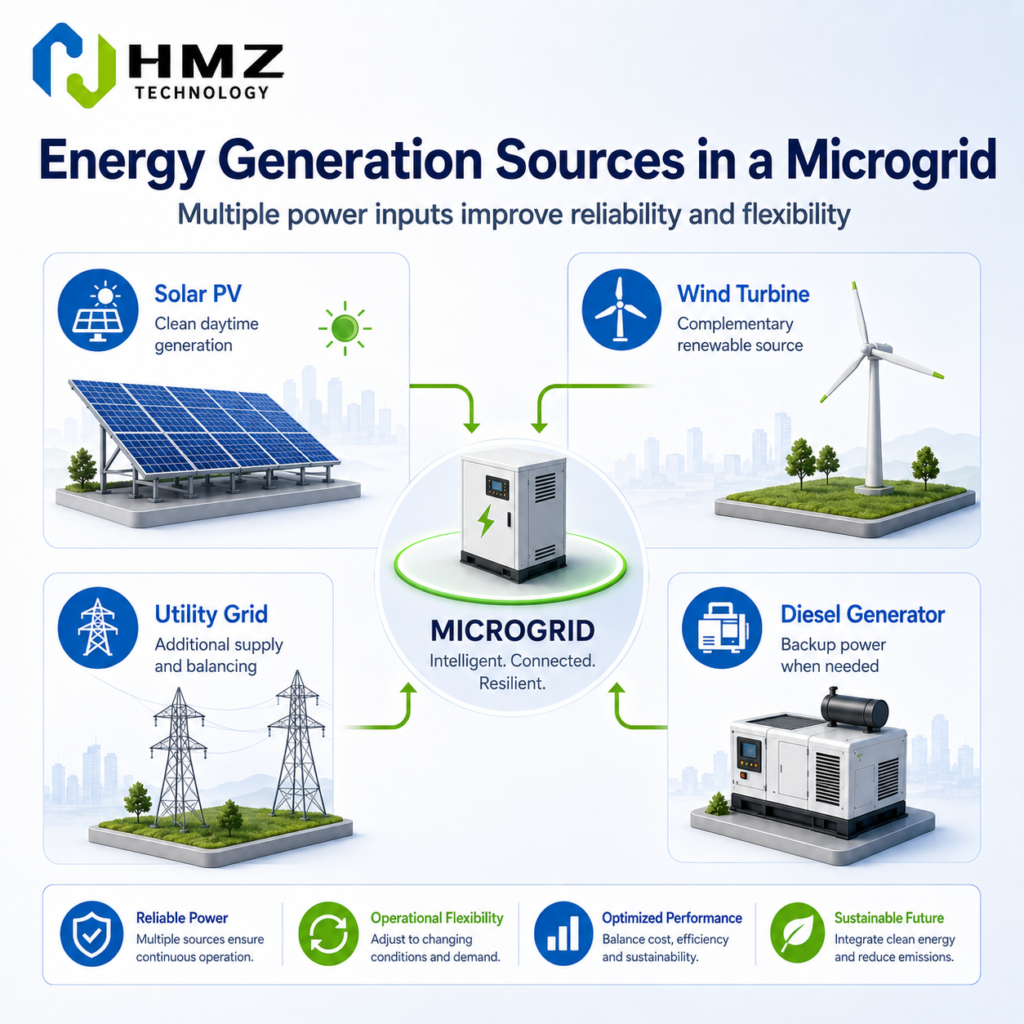
Common energy sources include:
- Solar PV
- Wind energy
- Utility grid
- Diesel generator
Solar PV System
Solar photovoltaic is one of the most widely used energy sources in modern microgrids.
Solar PV energy can be:
- Directly supplied to loads
- Used to charge batteries
- Combined with grid or generator power
2. Battery Energy Storage System (BESS)
Battery storage is one of the most important components of a modern microgrid.
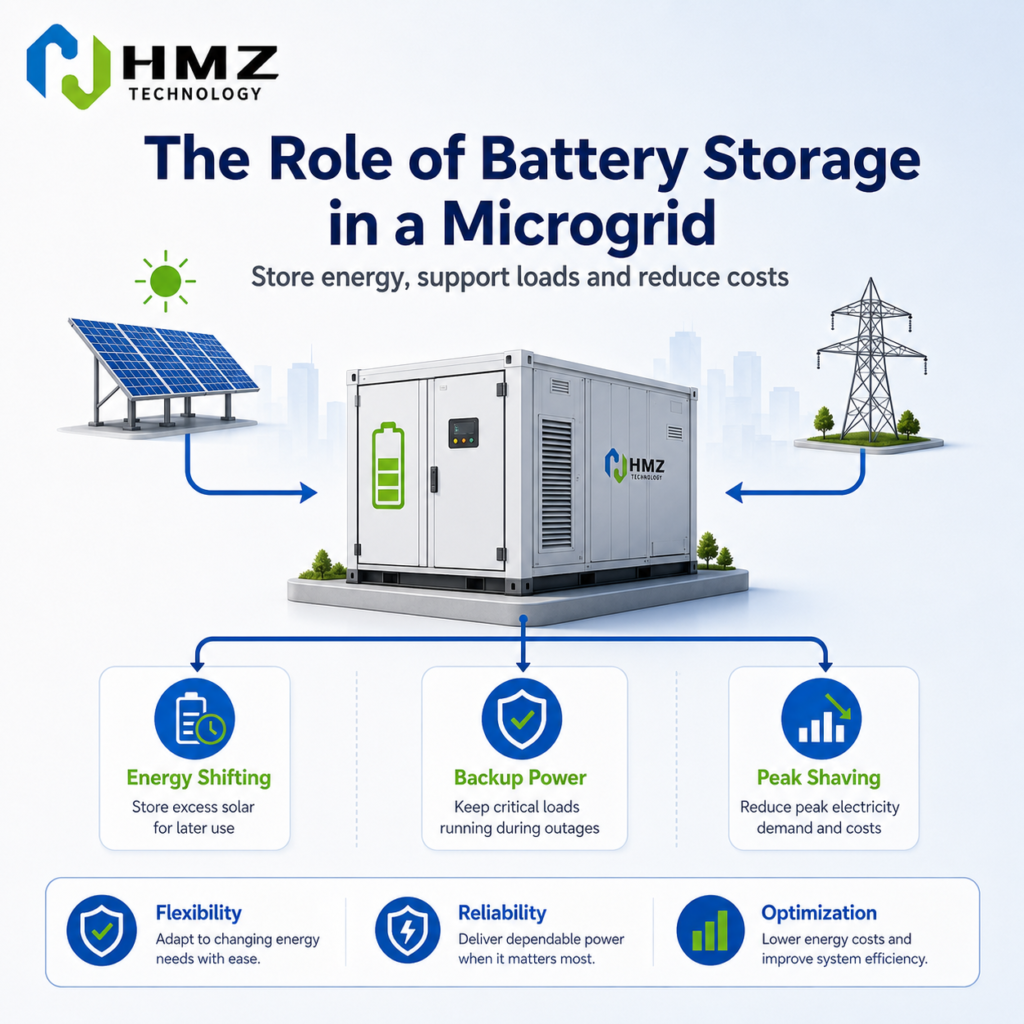
A Battery Energy Storage System allows electricity to be stored and used when needed.
Main functions:
- Energy shifting
- Backup power
- Peak shaving
3. Power Conversion System (PCS)
The PCS manages conversion between:
- DC power from batteries
and
- AC power used by facilities
It controls:
- Charging
- Discharging
- Power conversion
- Energy flow
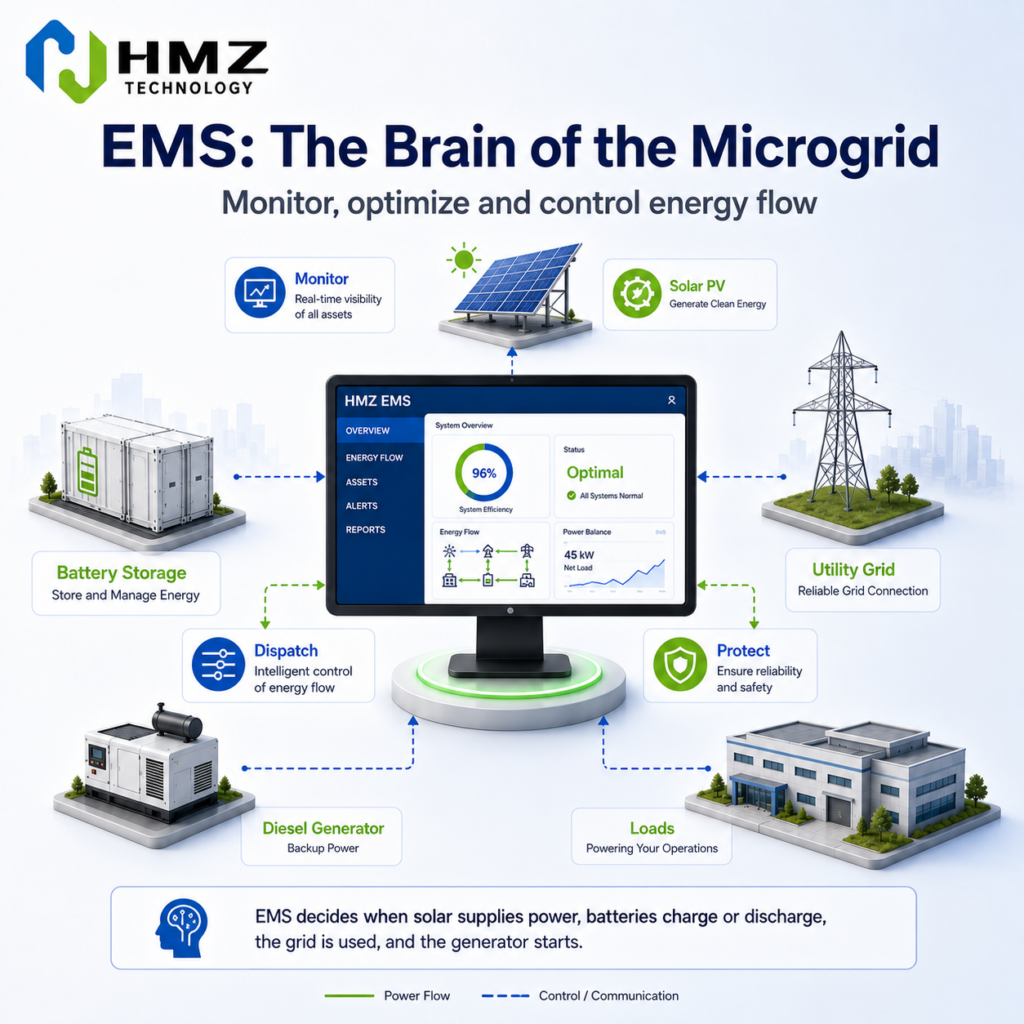
4. Energy Management System (EMS)
The EMS is the brain of a microgrid.
Without EMS, different energy components operate independently.
With EMS:
The whole system works together.
EMS monitors:
- Solar generation
- Battery status
- Electricity consumption
- Grid conditions
5. Energy Loads: The Purpose of the Microgrid
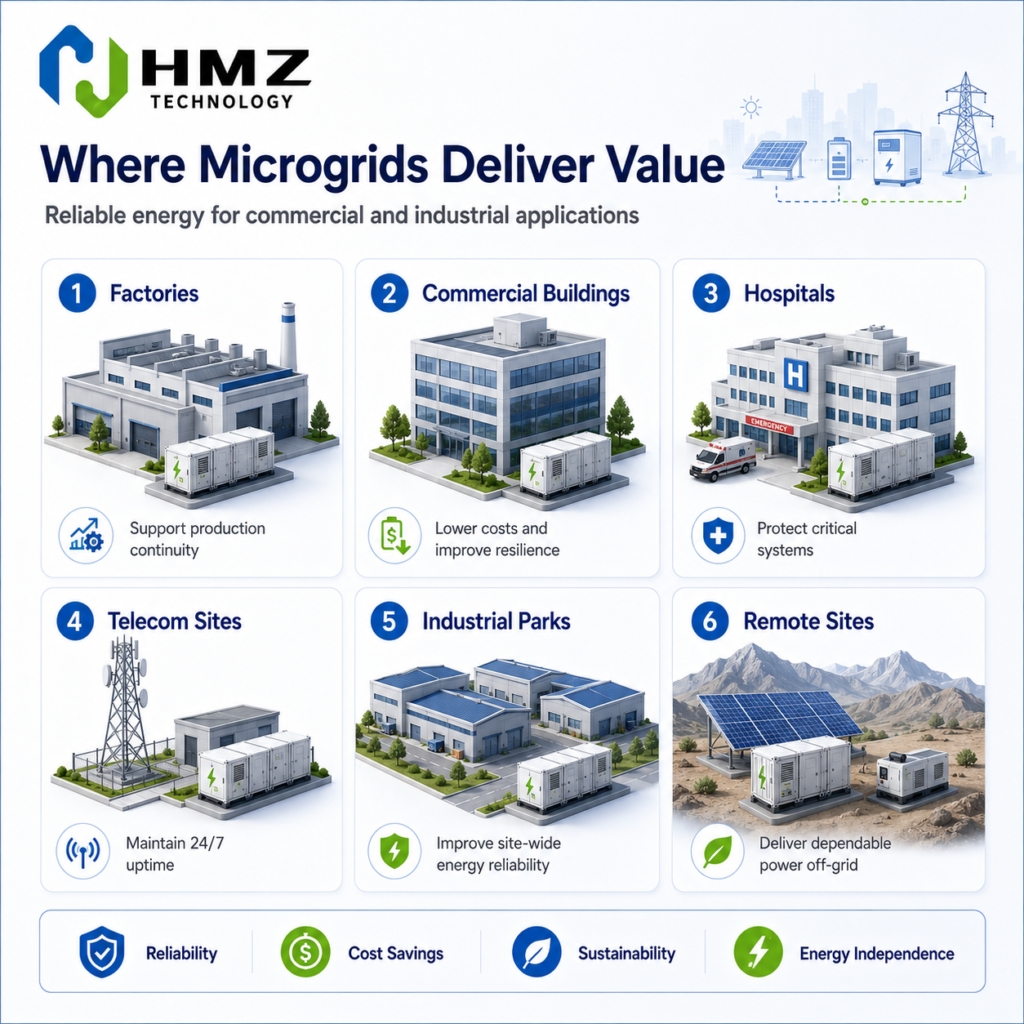
A microgrid exists to provide reliable electricity for actual energy users.
Examples:
- Factories
- Commercial buildings
- Hospitals
- Telecom stations
How Do These Microgrid Components Work Together?
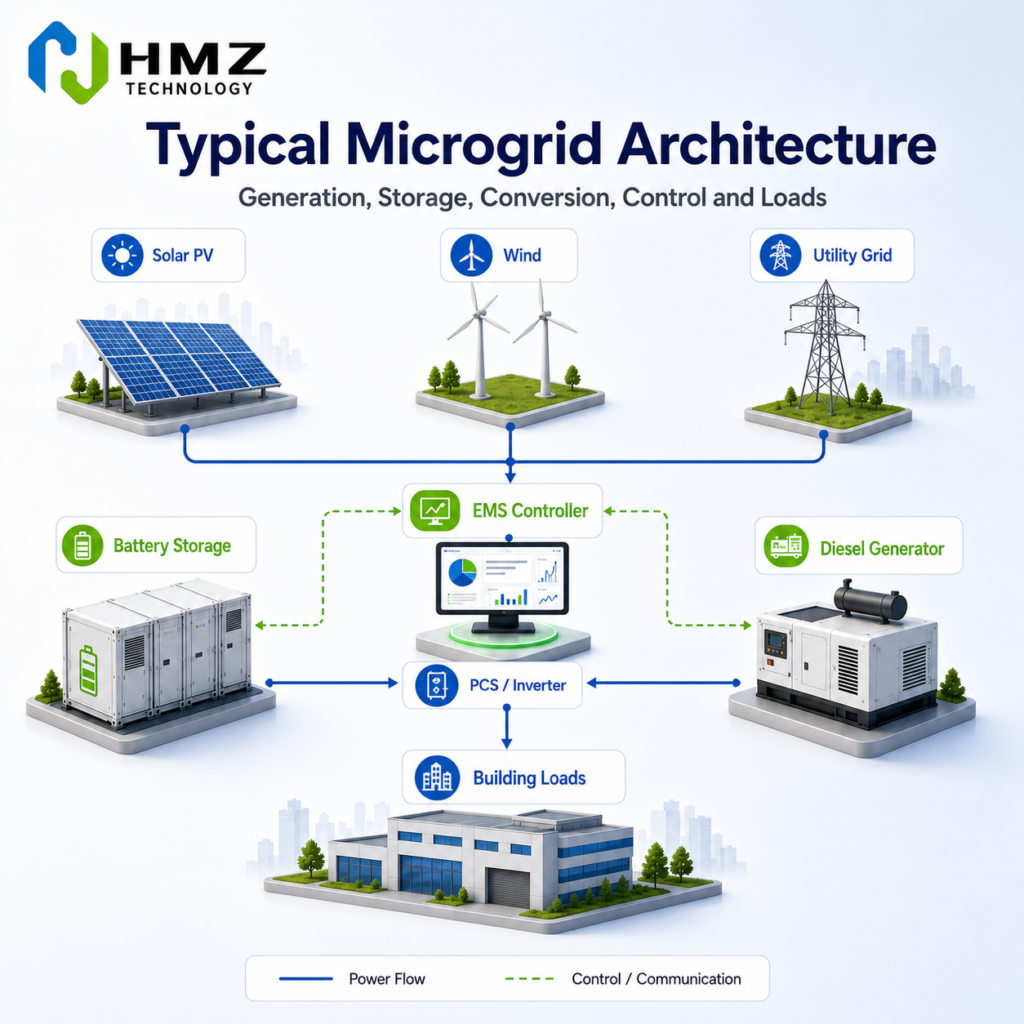
A complete microgrid operates as an integrated system:
Solar PV / Grid / Generator

↓

Energy Management System

↓

PCS + Battery Storage

↓

Industrial & Commercial Loads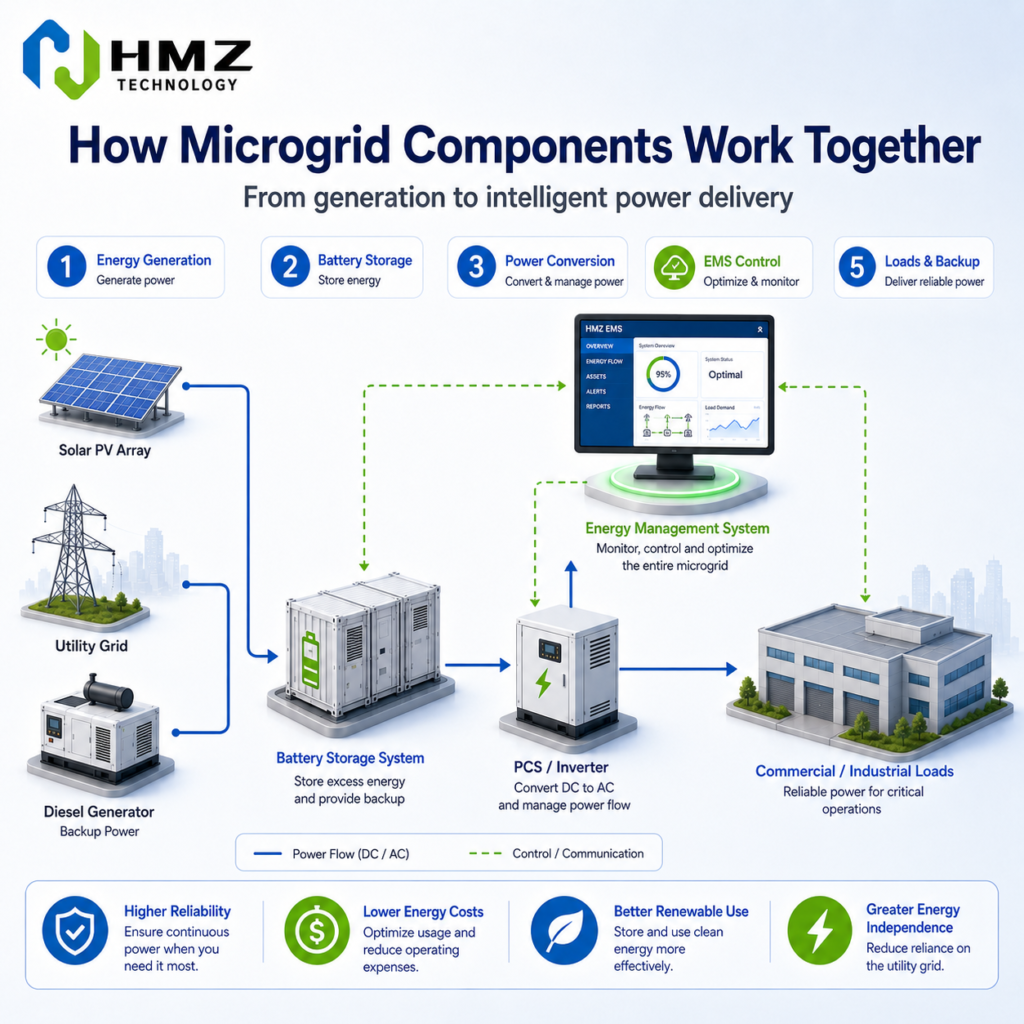
Why Is System Integration Important?
Installing individual components does not automatically create a microgrid.
The real value comes from integration.
A successful microgrid requires:
Proper System Design
Matching:
- Generation capacity
- Battery size
- Load requirements
Intelligent Control
Ensuring all components communicate effectively.
Reliable Equipment
HMZ Integrated Microgrid Solutions
HMZ Technology provides integrated energy solutions combining:
- Solar PV systems
- Battery Energy Storage Systems
- Hybrid inverters
- PCS solutions
- Intelligent EMS solutions
Our solutions support:
- Industrial facilities
- Commercial buildings
- Remote power applications
- Telecom infrastructure
Conclusion
A microgrid is not a single piece of equipment.
It is an intelligent energy ecosystem made up of multiple interconnected components.
The key components include:
✔ Energy generation
✔ Battery Energy Storage System
✔ PCS
✔ EMS
✔ Loads
When these components work together, businesses can achieve:
✔ Higher reliability
✔ Lower energy costs
✔ Better renewable utilization
✔ Greater energy independence
Build a More Reliable Energy Future with HMZ
A successful microgrid is not only about individual equipment, but about how solar generation, battery storage, power conversion and intelligent energy management work together as one complete system.
HMZ Technology provides integrated energy solutions for commercial and industrial applications, including:
✔ Solar PV + Battery Storage Systems
✔ C&I Energy Storage Solutions
✔ Microgrid System Integration
✔ EMS and Intelligent Energy Management
Whether you are developing an industrial park, factory, commercial building or remote power project, HMZ can support your project from system design to equipment supply.
Contact HMZ Technology today to discuss your next energy storage or microgrid project.